
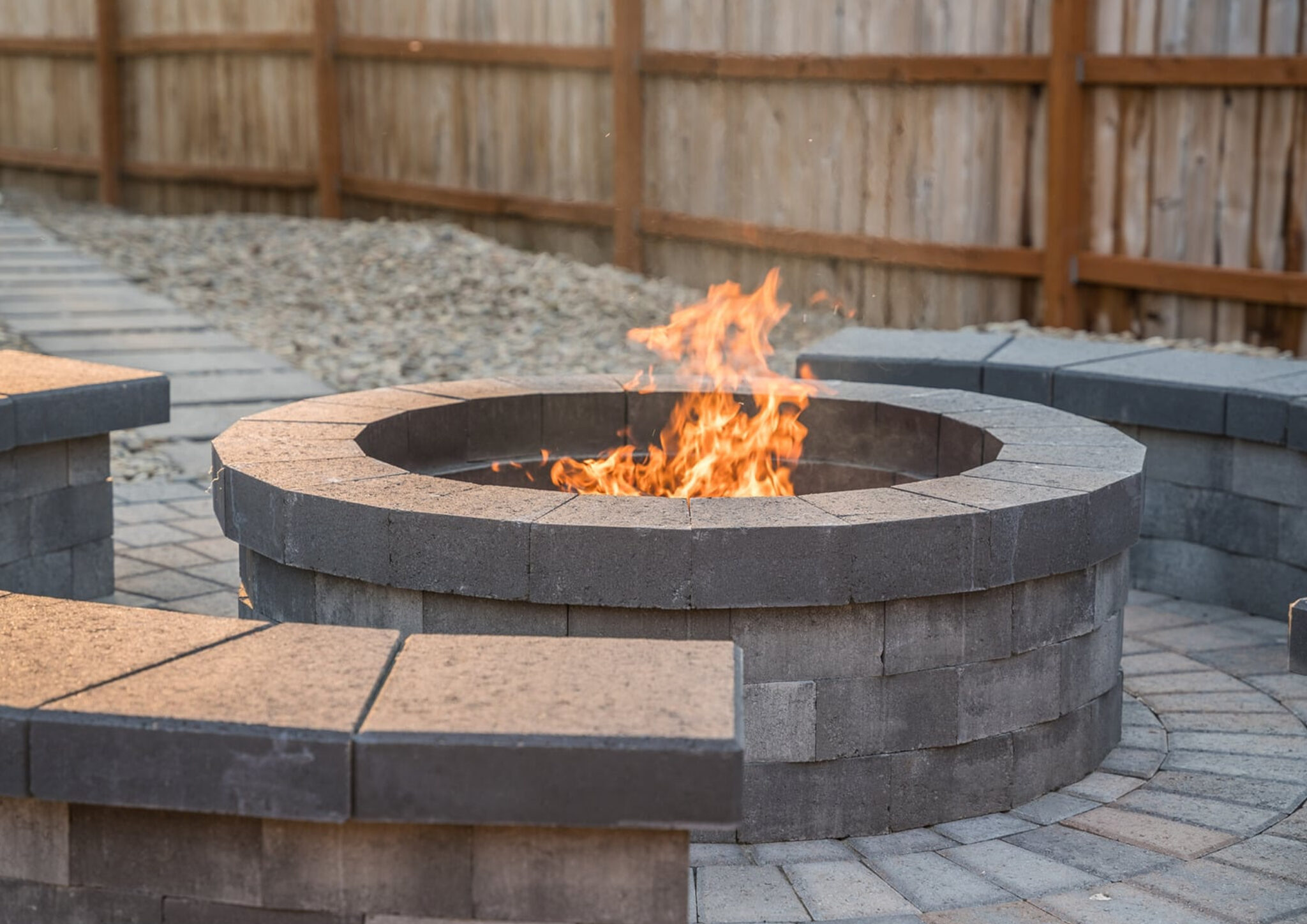
Choosing the right material for your fire pit is essential for safety, durability, and style in your Nicholson backyard. Georgia’s climate—with hot summers, occasional freezes, clay-rich soil, and seasonal rain—requires materials that can withstand heat, moisture, and soil movement. At Redwood Outdoor Designs, we specialize in custom outdoor living solutions, including fire pits, paver patios, pergolas, outdoor kitchens, retaining walls, and complete backyard transformations designed specifically for Georgia outdoor living.
Why Fire Pit Material Choice Matters
The material you select affects:
- Heat resistance and safety
- Longevity and maintenance requirements
- Overall appearance and integration with your backyard design
- Installation cost and complexity
Choosing the right material ensures your fire pit performs well, looks great, and lasts for years.
1. Natural Stone
Natural stone fire pits, such as granite, flagstone, or fieldstone, are a classic and durable choice.
Pros:
- Extremely durable and heat-resistant
- Blends naturally with landscaping and patios
- Compatible with paver patios and seating walls
Cons:
- Higher upfront cost
- Heavy, requiring professional installation
- May require sealing depending on stone type
Ideal for homeowners seeking a rustic, high-end look that lasts for decades.
2. Brick
Brick fire pits offer a traditional and structured appearance.
Pros:
- Classic and elegant aesthetic
- Durable when properly installed
- Can be combined with mortar for stability
Cons:
- Limited color options
- Mortar joints may require maintenance
- Bricks can chip if exposed to extreme heat repeatedly
Brick works well for traditional or formal patio designs.
3. Concrete
Concrete fire pits are highly customizable in size, shape, and finish.
Pros:
- Heat-resistant and long-lasting
- Can be stamped, colored, or textured for decorative appeal
- Works well for modern or large backyard designs
Cons:
- Can crack over time without proper base preparation and reinforcement
- Heavy and labor-intensive to install
- May require sealing to prevent water damage
Concrete is ideal for homeowners seeking contemporary or custom designs.
4. Steel
Steel fire pits provide a modern, sleek aesthetic and are often used for portable or gas-powered designs.
Pros:
- Lightweight and movable
- Heat-resistant when made from quality steel
- Can be powder-coated for durability and style
Cons:
- Can rust if not properly coated
- Lower-quality steel may warp under heat
- Requires careful placement to protect surrounding surfaces
Steel is perfect for modern patios or homeowners seeking a portable option.
5. Fire-Resistant Tile or Stone Veneer
Tile or stone veneer is often applied over a structural base to create a decorative exterior for fire pits.
Pros:
- Adds texture and visual interest
- Lightweight compared to full stone construction
- Compatible with gas fire pits
Cons:
- Not suitable as the main structural material
- Can crack under high heat if not fire-rated
- Requires professional installation for safety and durability
This option is ideal for homeowners seeking a high-end, decorative finish.
Cost Overview
Fire pit material costs in Nicholson typically range as follows:
- Natural stone: $1,000–$5,000+ depending on size and type
- Brick: $500–$2,500 depending on size and installation
- Concrete: $1,000–$4,000 depending on design complexity
- Steel: $300–$1,500 depending on size and quality
- Tile or stone veneer: $1,000–$3,000 for decorative applications
Adding features such as seating, patio integration, or gas lines will increase total cost.
Fire Pit Material Selection Tips
- Durability: Choose materials that withstand heat, moisture, and soil movement
- Maintenance: Consider how often the material requires sealing or repair
- Style: Ensure the fire pit complements your backyard and patio design
- Budget: Balance upfront cost with long-term durability and aesthetic value
FAQ: Fire Pit Materials in Nicholson
Which fire pit material lasts the longest?
Natural stone and high-quality steel typically offer the longest lifespan when properly maintained.
Are steel fire pits safe for wood-burning?
Yes, if constructed from heat-treated steel and installed correctly.
Can concrete fire pits crack in Georgia?
Yes. Without proper base preparation and reinforcement, concrete may crack over time.
Do decorative tiles withstand high heat?
Only fire-rated or heat-resistant tiles should be used; standard tiles may crack under intense heat.
Ready to Choose Your Fire Pit Material?
Selecting the right material is the foundation for a safe, durable, and visually stunning fire pit. Whether you prefer natural stone, brick, concrete, steel, or decorative veneer, professional planning ensures your fire pit complements your backyard while lasting for years.
Call Redwood Outdoor Designs today to schedule your free backyard design consultation!
